Log strength work, run circuits and runs, follow ready-made programs, and film your technique to get feedback on the movement. All training content is free — no programs behind a lock.
Free to download. Start straight away, no account needed.
Other apps lock the programs. We do the opposite.
App Store reviews, word for word.
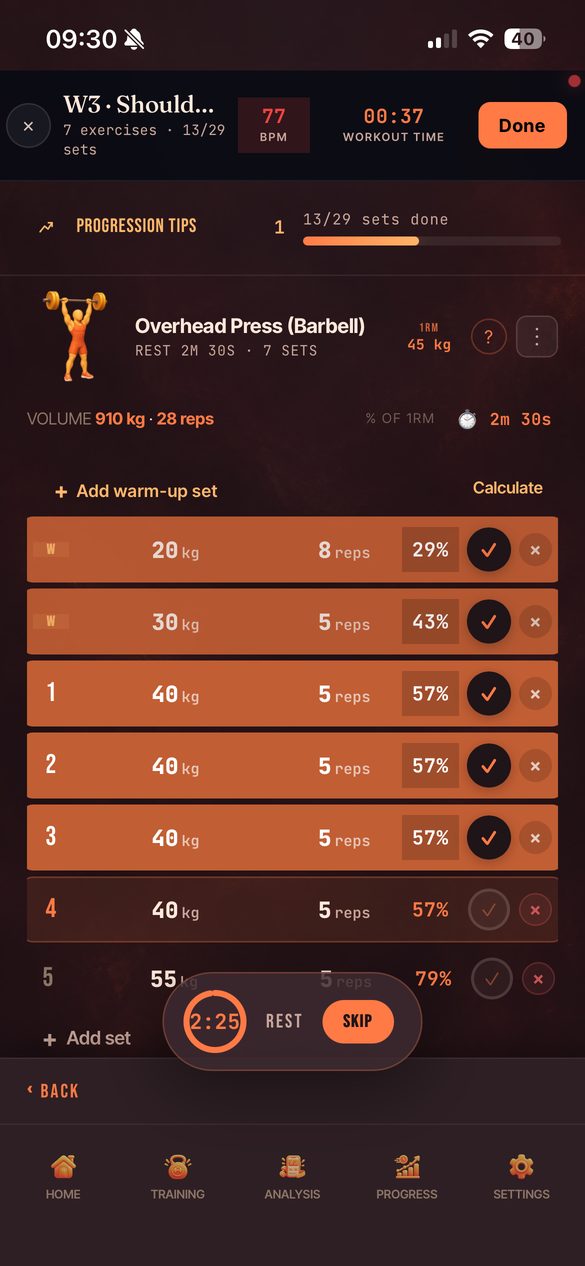
Weight and reps per set, a rest timer that starts itself, and last time's numbers in view while you type. Records are flagged the moment you beat them.

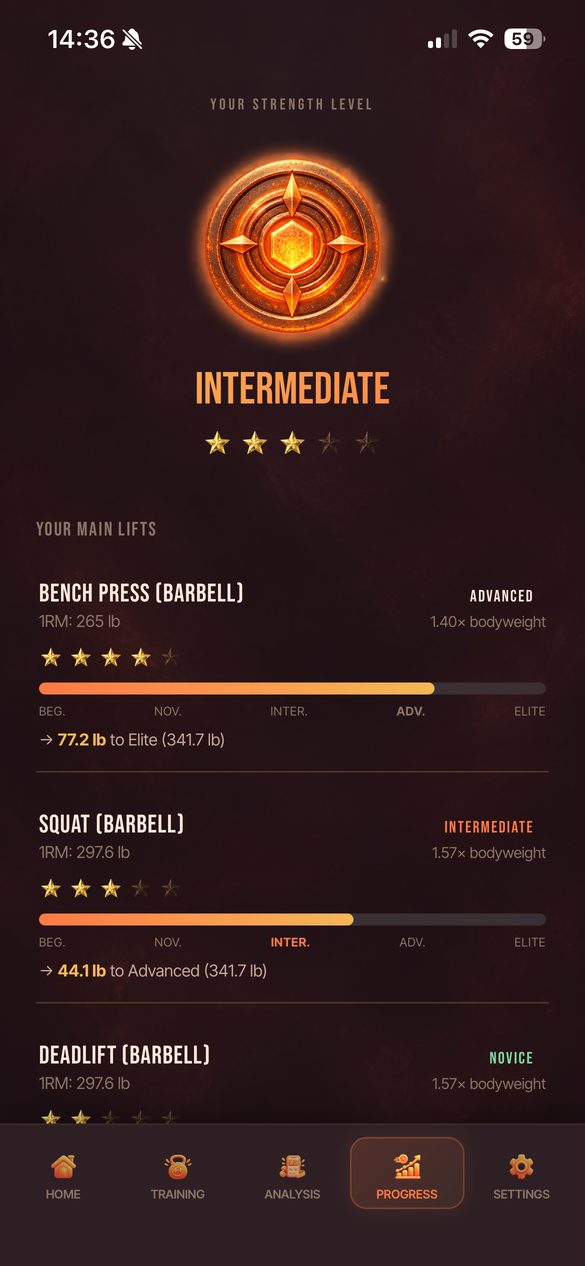
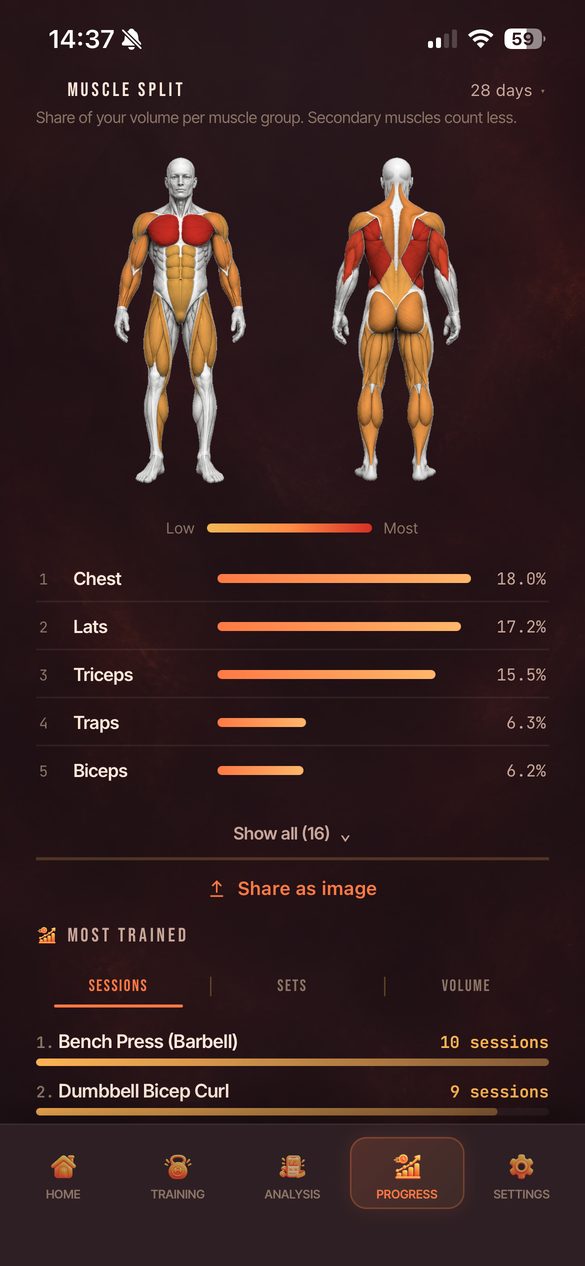
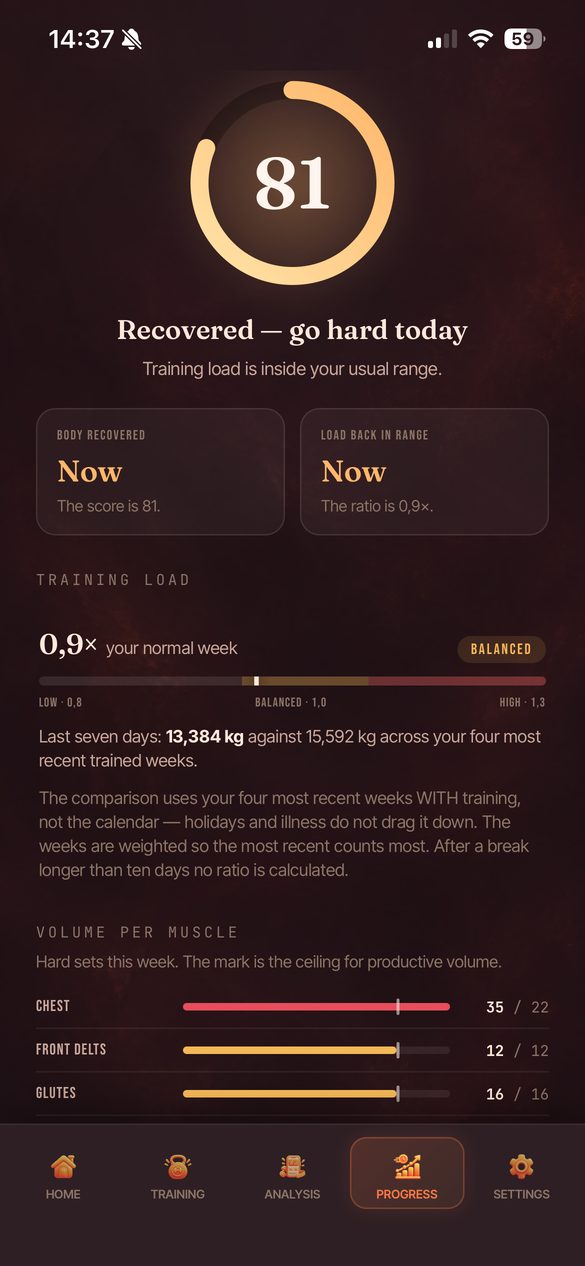
Volume per muscle group, personal records per exercise, weekly goals and streak. The muscle map shows what you actually loaded this week and what you missed.

The map shades every muscle group by how much hard work it got this week. What you're missing shows up immediately, and so does what you're overdoing.

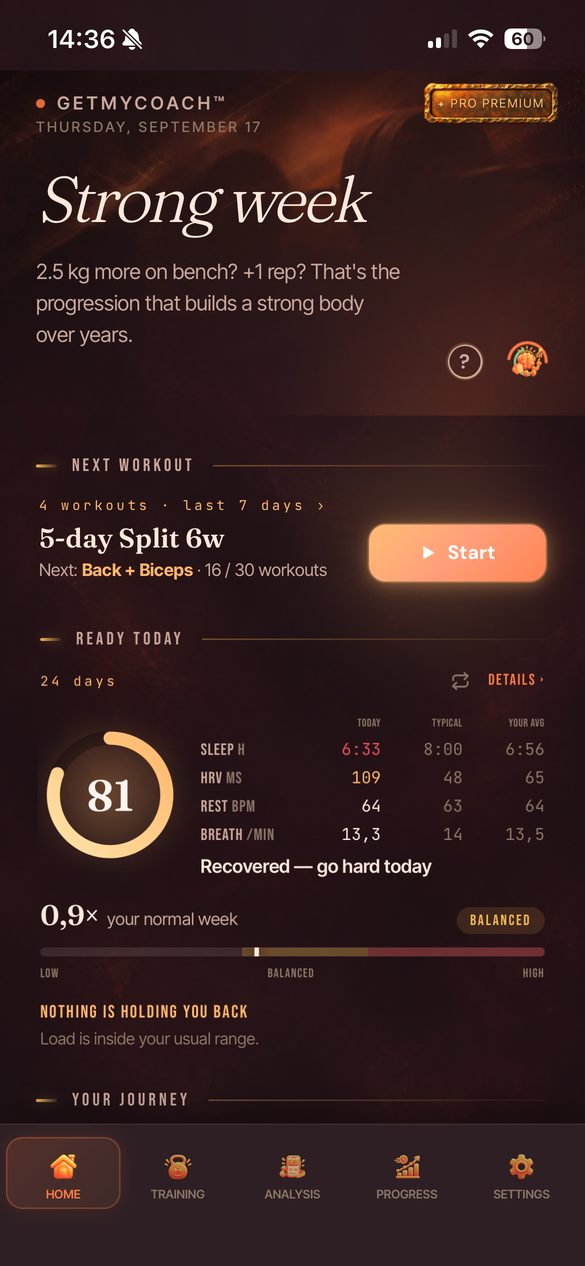
Heart rate variability, resting heart rate, sleep and respiratory rate weighed against your own baseline. When a value is missing it says so instead of guessing.

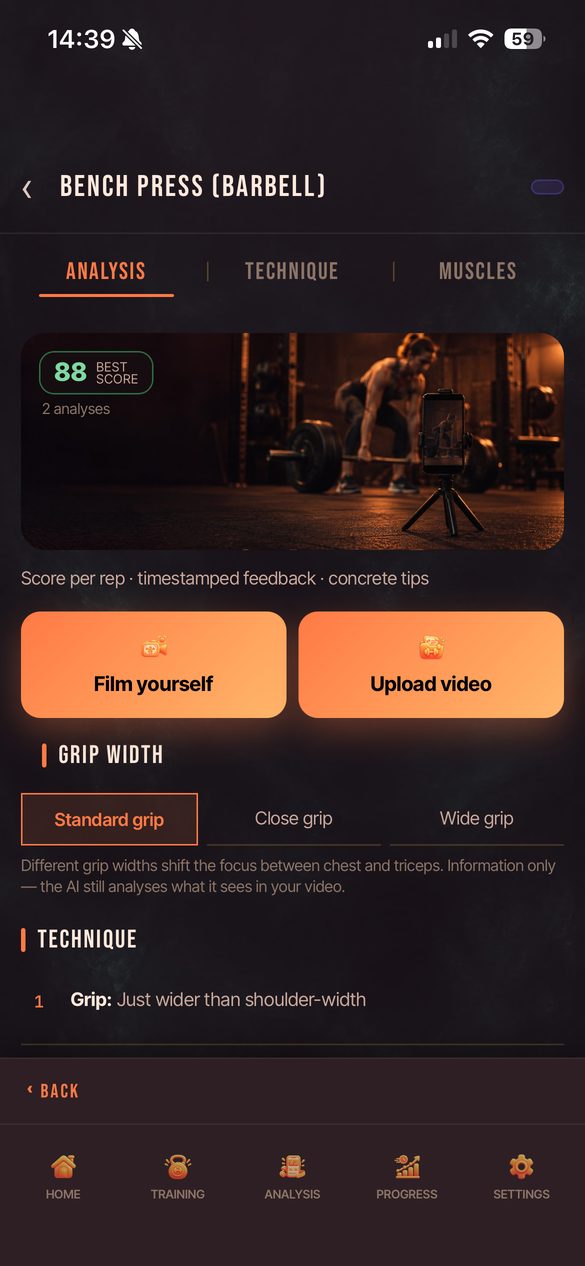
The pose detector reads your body in the video and the analysis points at what drifted. Works on squats and deadlifts — and on the golf swing, the tennis serve and the throw.

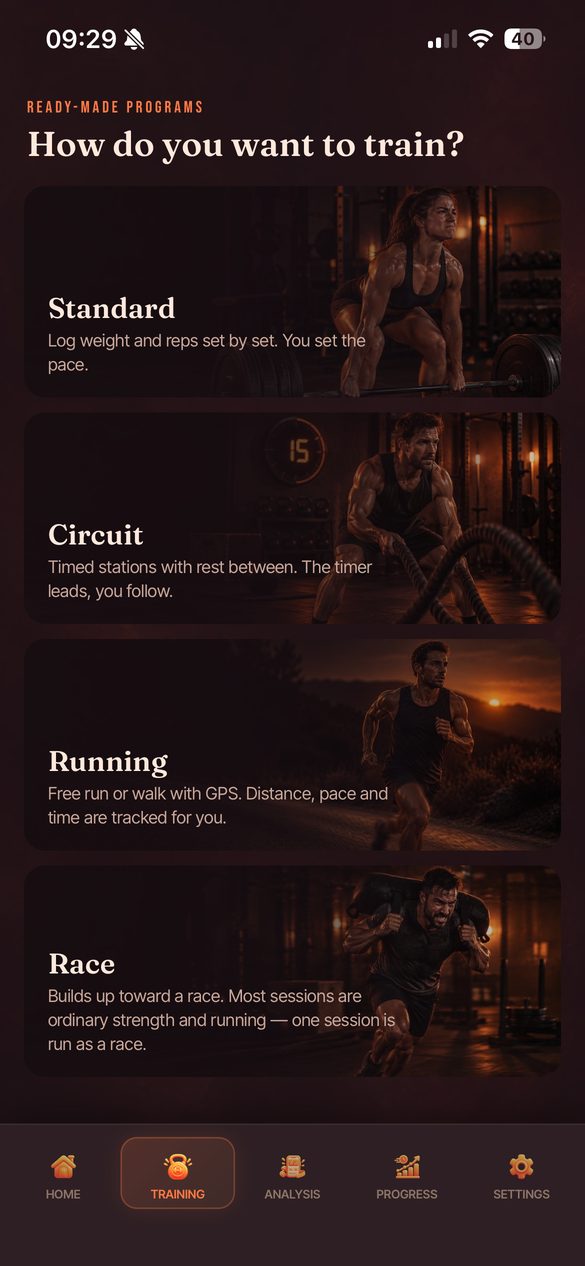
Not just which program. A normal workout runs at your pace with weight and reps. Circuit runs on seconds. Running follows GPS. Race builds toward an event.

Exercises, programs and technique analysis for forty sports. The same log for the strength session and for the sport itself.
All training content. No time limit, no card.
Adds the AI on top of everything free already gives you.
Monthly and yearly prices are shown in the App Store and Google Play before you buy.
Three guides on how a training plan is built, what actually drives the result, and how to pick a split.
How many days, which exercises, and how you know you're progressing. A plan you can follow from the first session.
Read the guide →What the research says about how often a muscle should be trained, and how to choose based on the days you actually have.
Read the guide →Progressing isn't always adding weight. Here is what it looks like week by week, with numbers.
Read the guide →In-depth articles on how training works: volume, rest, effort and progression. Start with how to log strength training in an app.
How to calculate 1RM: test a true one-rep max safely, estimate it with the Epley and Brzycki formulas and use percentages of 1RM to set your weights.
Read the article →Fix your deadlift form step by step: stance, grip, bracing and lowering, plus the most common mistakes, how to correct them and how to film your lifts.
Read the article →The 5 most common squat form mistakes, what causes them and how to fix each one. Plus step-by-step technique and how to film your own squat.
Read the article →A HYROX training plan for beginners: running, strength, station technique, a sample training week and race-day tactics to get you to the finish.
Read the article →A complete push pull legs routine for 3 or 6 days a week: full workout tables, sets and reps, how to add weight and what to do if you miss a day.
Read the article →How long to rest between sets depends on your goal. Get clear rest times for strength, muscle and endurance, plus tips for supersets and busy gyms.
Read the article →RPE and RIR explained simply: what the numbers mean, an RPE to RIR chart, how to rate your sets accurately and how to use them in your program.
Read the article →How many sets per muscle group per week should you do? Learn what a hard set is, sensible ranges for beginners and lifters, and a sample week.
Read the article →What to record for every set, how to read your log to know when to add weight, and what a good strength training app needs. Checklist included.
Read the article →Download it free and log your first workout in five minutes.